TRAVEL + EXPERIENCES
The Perfect Vacation…Designed
Joe Schnur · 3 min read
Read Article →
Every day, your body is responding to what happens around you.
What you eat. When you eat. How you exercise. How well you sleep. The medications and supplements you take. Whether you feel energetic, anxious, lonely, angry, connected, or happy.
Even an argument with your spouse may affect your sleep, heart rate, blood pressure, appetite, glucose, and recovery.
All of these experiences feed our biology.
But today, most of the clues are lost.
Each of us is a clinical study happening in real time.
We change our diet and see what happens. We start a supplement. We stop a medication. We exercise harder. We sleep less. We go through a stressful week.
Our bodies respond, but the information is rarely captured in one place or connected over time.
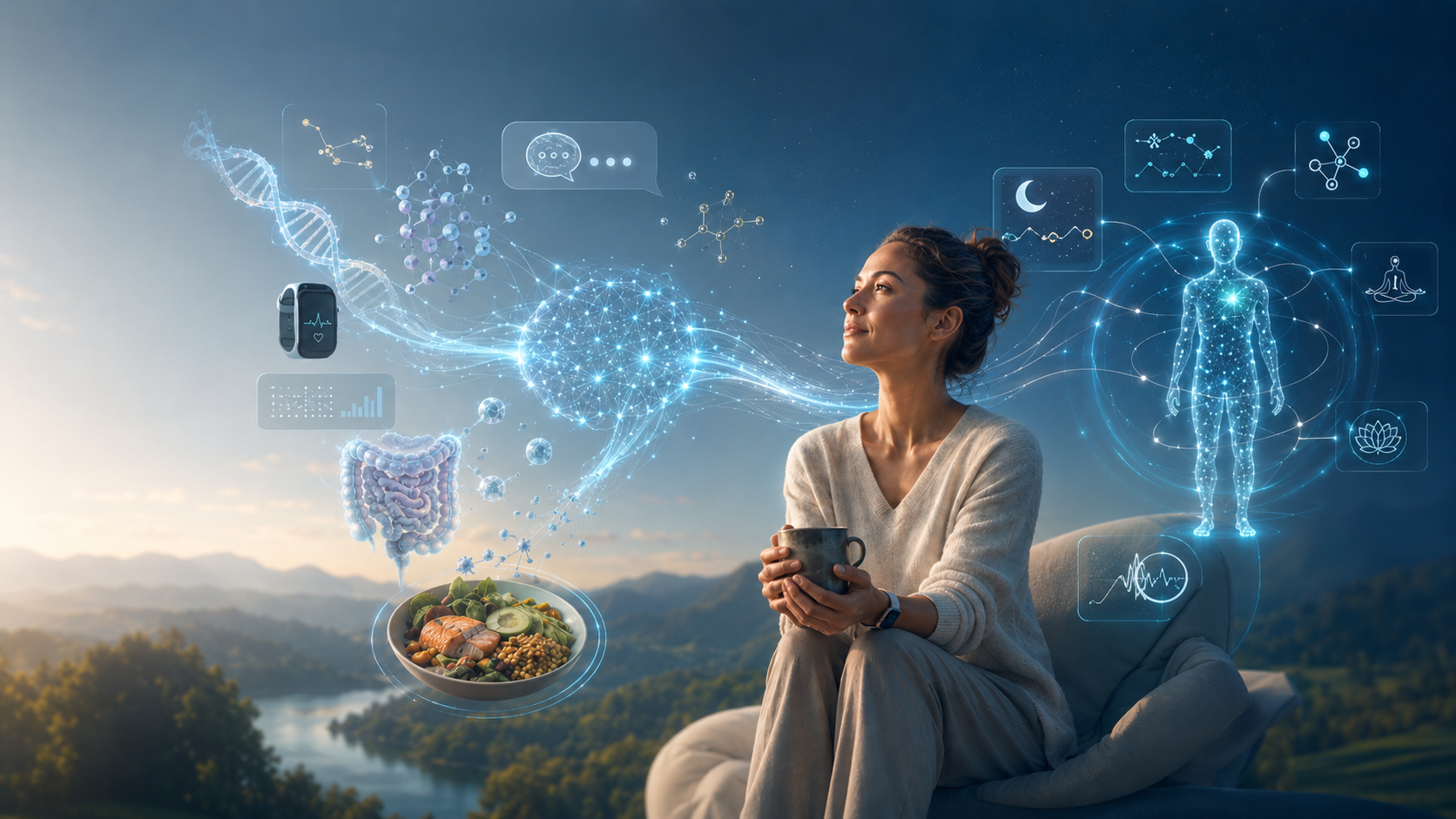
Your physician may see your annual bloodwork. Your wearable may track your sleep and heart rate. A DNA test may identify inherited tendencies. A microbiome test may recommend certain foods.
But none of these systems understands the full story.
Our data does not continuously feed a large intelligence model capable of recognizing the patterns within our individual biology.
Imagine combining:
That is an extraordinary amount of information. Far too much for one person — or even one physician — to continuously evaluate.
But not too much for AI.
AI could search across years of information and identify relationships that would otherwise remain invisible. Did poor sleep begin after a medication changed? Did glucose rise during a period of stress and loneliness? Did a new diet improve inflammation but reduce energy? Did exercise intensity, recovery, hormones, and mood change together?
Our biology is giving us clues. AI may finally help us understand what they are saying.
This would not feel like another medical portal.
It would feel like a health coach you talk to every day.
You upload a photo of your meal. You describe how you slept. You mention that you feel unusually tired. You explain that you had a stressful day or an argument with your spouse. You record a new symptom, medication, workout, or supplement.
The system listens, remembers, and connects these daily experiences with changes in your biology.
Over time, it builds a living model of you.
Not just your medical history. Your biological history.
Most health products give recommendations. Eat this. Avoid that. Take this supplement. Exercise more. Sleep longer.
But the real question is not what generally works. The real question is:
What is happening inside my body, and why?
Two people can have the same laboratory result for completely different reasons. One may be influenced by genetics. Another by medication, diet, stress, sleep, hormones, or a combination of factors.
A continuously learning health model could help identify the most likely pathways and show a physician where to investigate next. It would not replace the physician. It would give the physician a much more complete picture.
The future of personalized medicine may be a model that learns from everything affecting your health.
We do not need more disconnected health data.
We need intelligence capable of turning that data into understanding.
Our biology gives us clues.
AI can unlock the message.